
 Contact
 8 min read
At Google I/0 2026, an announcement about agentic search was made that has sent shockwaves through businesses and digital marketers alike. Is it time to panic?
Now moving beyond just answering questions, Google Search is going to have a series of AI-powered updates that start completing tasks for users. These capabilities are referred to as “agentic,” meaning AI can perform actions on a user’s behalf rather than simply presenting the information.
For home services businesses in spaces like plumbing, HVAC, electrical, roofing, or garage doors, the news has created plenty of concern.
- Will customers still be able to see my website?
- Does SEO still matter?
- Is AI just going to answer everything without sending traffic to my business?
The good news? Your company can still be found, and SEO may matter more than ever! As a matter of fact, trusted local businesses may become even more visible because of this update.
So before you sound the alarms, take a deep breath with us. Let’s take a level-headed look at what all this means!
What Google’s Agentic Search Update Actually Is
According to Google, AI Overviews now reach more than 1.5 billion users every month, while AI Mode has surpassed 1 billion monthly users. The company has described this latest evolution as one of the most significant changes to Search in over two decades.
Google Search has traditionally worked like a directory.
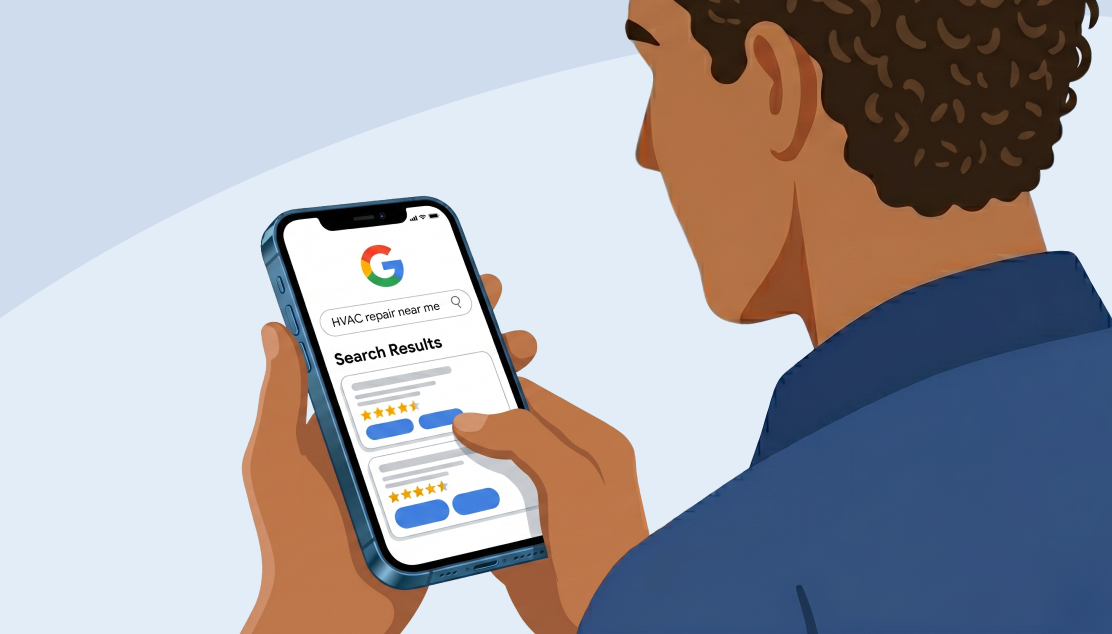
A homeowner searches for “water heater replacement near me”. Then, Google displays a list of websites, local businesses, ads, and maps. The customer clicks through several results and makes a decision.
Google’s new AI-powered Search experience is designed to reduce the amount of work required from the user. Instead of showing only links, Google will soon be able to:
- Research multiple sources simultaneously
- Compare service providers
- Summarize findings
- Monitor topics over time
- Make phone calls to businesses
- Check pricing and availability
- Assist with booking services
- Build ongoing “information agents” that continue researching for users after the initial search
This means operating less like a traditional search engine, and more as a digital assistant.
Instead of asking “Who installs generators near me?”, a homeowner may eventually ask “Find the highest-rated whole-home generator installer within 25 miles, compare warranties, check availability next week, and help me schedule an estimate.”
Beginning this summer, Google Search will be able to handle much of that research process automatically.
What This Update Is NOT
This is where many business owners are getting the wrong impression.
It Does Not Mean Websites Are Going Away
Google’s AI still needs information sources.
The system will continue gathering information from websites, business profiles, reviews, local citations, directories, and other trusted sources across the web.
If anything, authoritative sources become more important because Google’s AI needs reliable information to generate recommendations.
It Does Not Mean SEO Is Dead
Every major Google update over the past 20 years has sparked predictions about the end of SEO. Yet, businesses still need visibility today.
What’s changing is how visibility is earned. Instead of optimizing solely for rankings, companies should increasingly optimize for:
- Brand authority
- Review signals
- Expertise
- Service-area relevance
- Structured business information
- Trustworthiness
- Entity recognition
Google’s AI needs confidence before recommending a company. The businesses that provide the strongest trust signals are likely to benefit.
It Does Not Mean Google Will Recommend Random Companies
One common fear is that AI will simply invent recommendations. Google has repeatedly emphasized that AI Search relies on information gathered from real-world sources, including local business information and the broader web.
For local service searches, reputation still matters.
The Question Every Contractor Is Asking
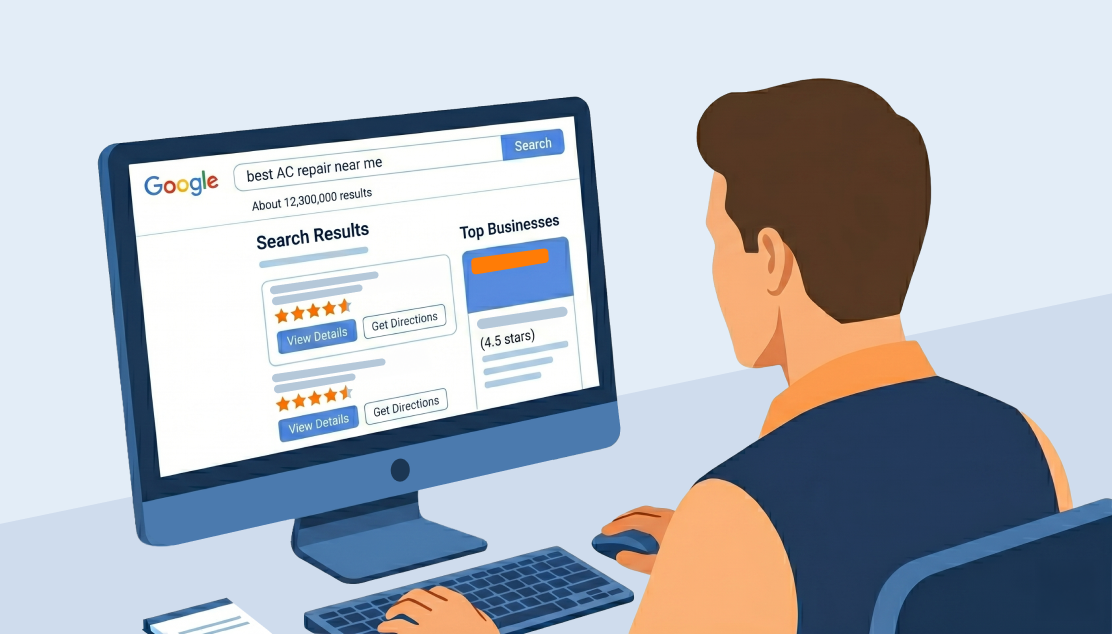
“Will My Company Still Show Up Online?”
Yes. However, the Search interface will encourage users to ask follow-up questions rather than scroll through the traditional list of links. So the links aren’t disappearing, they’re just not necessarily going to be the priority for specific types of searches.
What matters now is whether Google’s AI has enough evidence to recommend your company over your competitors.
That confidence is often built through signals Google has relied on for years, including reviews, business information, website content, and brand authority. BrightLocal’s 2025 Local Consumer Review Survey found that 98% of consumers read online reviews for local businesses, reinforcing the role reputation plays in local search visibility.
For decades, ranking has been mostly about appearing in the top few results. Now, businesses may need to become the answer itself. When AI compares three local electricians, two plumbers, or several roofing companies, Google will look for evidence supporting why one company deserves to be recommended over another. That evidence comes from:
- Google Business Profile optimization
- Online reviews
- Website authority
- Service content
- Brand mentions
- Local relevance
- Consistent NAP data
- Experience and expertise signals
These are many of the same factors local SEO has always relied upon, reinforcing the need for a trusted digital marketing company for SEO.
Why Home Service Companies May Actually Benefit
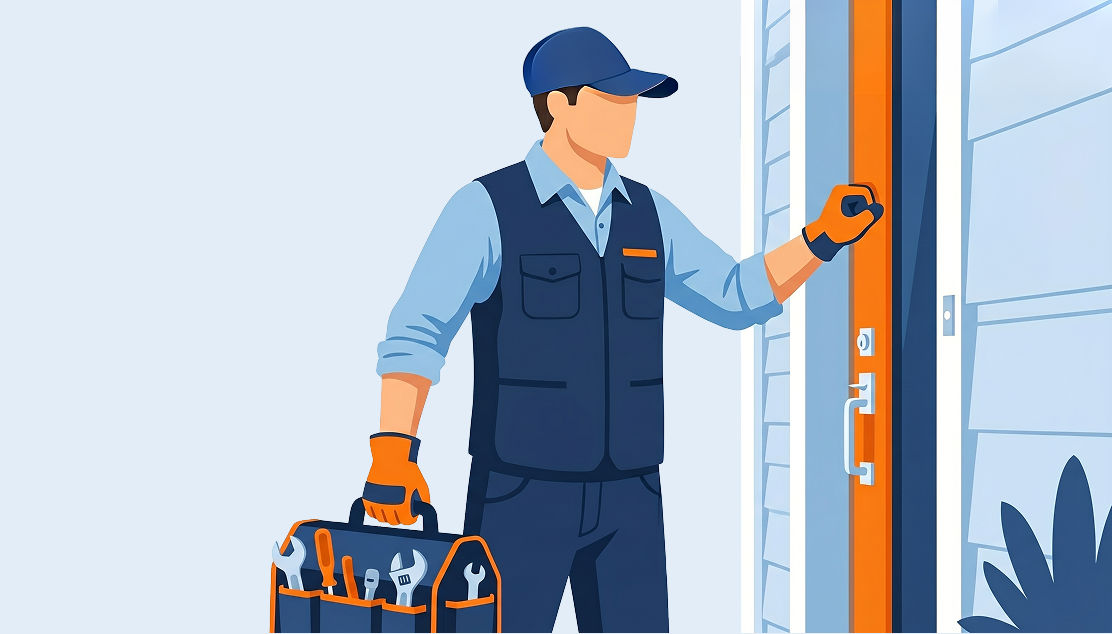
The reality is that local service businesses possess something AI cannot easily replace: physical presence. A homeowner still needs:
- A plumber to stop a leak
- An electrician to install a panel
- A technician to repair a furnace
- A roofer to replace shingles
- A pest control company to eliminate infestations
AI can compare companies and even make a phone call for you, but it can’t install an air conditioner. It can’t swap out a sump pump, and it certainly can’t repair your roof.
As Google pushes further into agentic search, their goal is not to replace service providers. Their goal is to help consumers find the right provider faster.
If you’re positioned to be the one Google recommends, you absolutely stand to benefit.
What Home Service Companies Should Be Doing Right Now
Rather than panic, focus on strengthening the signals Google’s AI will rely on.
1. Invest in Your Brand
AI recommendation engines favor recognizable, trusted brands. Home services companies with stronger reputations will have an advantage.
2. Double Down on Reviews
Reviews are likely to become even more influential as AI evaluates customer sentiment and trustworthiness. According to BrightLocal, nearly 9 out of 10 consumers are more likely to choose a business that responds to all of its reviews. It’s safe to assume that’s the type of trust signal that agentic search will be looking for.
3. Build Service-Specific Content
There’s an old SEO saying that says “content is king.” While that crown may now belong to trust, helpful content is still the vehicle that communicates trust and builds authority. Detailed content helps Google understand:
- What services you offer
- Where you offer them
- Why customers choose you
4. Strengthen Your Google Business Profile
Google business profiles (GBPs) remain one of the most important local search assets for human users and agentic systems alike.
5. Focus on E-E-A-T
Google continues emphasizing Experience, Expertise, Authoritativeness, and Trustworthiness as critical quality signals.
These concepts become even more important when AI is deciding which companies deserve recommendations.
Our Take at RYNO
Every major technological shift creates uncertainty. We’ve seen it with mobile search. We’ve seen it with voice search. We’ve seen it with AI Overviews. Now, we’re seeing it with agentic search. Just like with those other major updates, contractors that adapt and evolve stand to benefit.
The businesses that succeed won’t be the ones trying to outsmart Google’s AI. They’ll be the ones building stronger brands and earning more trust in their market than their competitors. At RYNO, our suite of trusted digital marketing services helps you do exactly that.
Google Agentic Search FAQs
For contractors, the message is pretty straightforward: Google is continuing to reward content that is useful, relevant, and trustworthy while making low-value, generic, or unhelpful content less competitive.
