
 Contact
 2 min read
One of the biggest mistakes you can make as a contractor today is only marketing towards people that need you right now.
Think about this scenario. There are two homeowners, and each have 20+ year-old AC systems.
Homeowner A has their AC die in the middle of the summer, and decides it’s time to bite the bullet. They search “AC replacement near me” in Google, and see LSAs, Google Ads, Maps results, and organic results, and call several companies.
Homeowner B has seen your company on CTV, gets a targeted email about replacement, recognizes your truck wraps, and the same thing happens. When their AC dies, they head to Google, too. Your company is only the fourth result, but they recognize your name immediately and call you first. Your CSR seals the deal and books the appointment.
Both of these scenarios are going to appear in analytics as a Google lead, but did Google actually create both customers? No. It simply captured them.
Today, great home services marketing isn’t just about putting your company in front of customers when they’re ready to buy. It builds brand awareness and preference before they even start searching, and makes sure you’re there when they do.
What Does It Mean to Capture Demand?
Capturing demand is pretty straightforward. It’s reaching someone who already has a problem, need, or purchase intent. And for contractors, this often shows up for searches online like “emergency plumber near me”, “roof replacement”, and “electrical repair”. This is where SEO, PPC, LSA, and now GEO, shine.
Obviously, there’s no world in which capturing online demand becomes outdated. Contractors still need to focus their efforts on digital marketing strategies that target captured demand. After all, according to BrightLocal, Google is still involved in 71% of local business search journeys. And someone who just had their AC stop working in the middle of July? That’s a super valuable prospect for an HVAC company. The problem is, every other HVAC company in town wants that homeowner, too.
The Most Obvious Leads Are Also the Ones Everyone Is Fighting Over
This won’t be news to most home services operators that have been around for more than 5 years, but the economics of demand capture have been changing. You can point to increased competition, lower demand, changing search dynamics and the rise of AI search…the list goes on.
In 2025, LocaliQ analyzed roughly 3,200 U.S.-based home services search ad campaigns that ran for a year, and found evidence to reflect what we’ve all been feeling. Take a look:
- CPC increased for 75% of home service businesses.
- Conversion rates decreased in over 60% of home services categories
- Average conversion rate decreased by almost 15% YoY
- CPL increased for over two-thirds of home services businesses
- Average overall CPL across home services was $90.92
If you’re a contractor looking at these metrics, you might wince remembering the “good ol’ days,” but your takeaway absolutely should not be that paid search is too expensive. Paid leads are high-intent, and they are incredibly valuable because the homeowner is ready to buy.
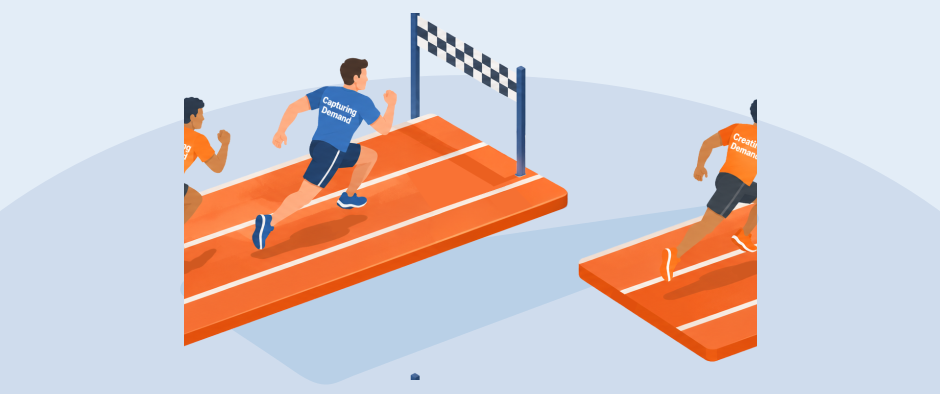
However, this is also why every contractor wants them, and why there’s so much competition for paid leads. The mistake you could be making isn’t competing for these leads, it’s only marketing to homeowners after they’ve demonstrated purchase intent. If that’s your plan, you’re entering the competition at the same exact time as everyone else. Wouldn’t it be great if you could get a head start to the race?

What Does It Mean to Create Demand?
Before we get into the how, let’s make an important distinction. Demand creation is not the same as creating a need that didn’t exist. A roofer isn’t causing hail damage any more than an HVAC company can make an air conditioner 15 years old, or a plumber makes a toilet clog. What marketing can create, however, is important.
Marketing creates:
- Awareness of the problem
- Awareness of the solution
- Awareness of your brand
- A reason to act
The best part? All of this can happen before someone ever types their query into Google, ChatGPT, or any other search platform. You can create a relationship with the homeowner before they enter the market, giving you that head start before the race to win the homeowner even begins.
We mentioned earlier what marketing channels were good for capturing demand, but for creating demand, the channels might look like:
- CTV
- Targeted Email
- Direct Mail
- Social
- Video
- Existing-customer marketing
The Customer Journey Has Become Messier
It’s worth noting for both contractors and their marketing agencies that people are spending a significant amount of time researching before the coveted click occurs. The customer journey is changing rapidly, so taking a simplistic view and assuming that it goes Ad→Click→Lead isn’t valuable. It still happens that way sometimes, sure, but not as often as it used to.
To illustrate this point, we can look to Modernize’s 2025 Homeowner Insights research, which included over 150,000 homeowners across home services trades. Here’s some of what they discovered:
- 51.61% spent 1-5 hours researching their project
- 32% were actively engaged in researching and planning their next home improvement
- Almost 30% plan on spending more than 10 additional hours researching before hiring a contractor
Another Modernize survey showed that nearly 7 in 10 homeowners research contractors online, and heavily factor into their decision things like reviews, references, and reputation. So we can see that homeowners are spending a lot of time online researching contractors before they make a decision. And with BrightLocal’s data point that 75% of consumers used multiple channels during their most recent local business search, we’ve started to paint a picture that the customer journey definitely has changed, and it’s gotten messier.
The Attribution Dilemma
A homeowner could have seen a CTV commercial for a plumbing company along with a targeted email a few weeks ago. Today, they have a problem with their toilet, and Google “toilet repair near me”. They visit a few websites, look at reviews, and then come back to Google and search for a specific company name, and call.
What analytics might report is that a branded organic search generated a lead. But did SEO actually create that customer? It definitely helped capture them, but it didn’t necessarily create all the awareness and trust that caused this homeowner to choose a specific organic result. The last-click attribution could be very misleading as a representation of the true customer journey, and it’s why talking about demand creation is a conversation worth having.
Brand Familiarity Changes the Search
If you take one single thing away from this blog today, remember this: consumers don’t always head to Google as blank slates. Oftentimes, they already recognize brands before they search. That’s key.
Google has published research of their own that supports similar findings in advertising psychology research about prior brand exposure’s influence on consumers for decades. They connected brand awareness, familiarity, and consideration with branded search behavior and found that search behavior changes as consumers progress from recognizing a brand toward considering it.
There’s even more value in brand familiarity that extends beyond the purchasing decision. As many contractors continually weigh price changes to navigate the market, consider this: Google also published research demonstrating that 54% of consumers were willing to pay nearly 30% more for a familiar brand.
So the question is, who would you rather compete for? A homeowner who has never heard of your company before, or one that’s seen your CTV commercials, your mailers, and email campaigns already? This is the power of demand creation. It makes demand capture more powerful.
Demand Creation Matters Even When Homeowners Aren’t Ready Yet
A lot of the demand for home services work exists somewhere between “I’ll eventually need this”, and “I need this right now.” Angi just recently released their 2026 State of Home Spending Pulse, which found that homeowners are scaling back some discretionary projects as costs rise, while continuing to prioritize necessary repairs and maintenance. Similarly, Modernize found that about 53% of homeowners had postponed or cancelled projects because of cost despite remaining in the research and planning phase.
So, what does that tell us about demand creation? That means demand can exist in the future even if the search doesn’t happen today. Think about an old furnace, water heater, roof, or electrical panel. These things might still “work” today, but the homeowner knows at some point soon, they’ll probably need to replace them. So contractors can wait until the homeowner finally decides to move forward, or marketing can establish you as a familiar option while they are still researching, planning, or postponing the purchase.
Your Existing Customers Are a Demand-Creation Audience, Too
Demand creation shouldn’t just target new customers, either. If you aren’t tapping into your existing customer base, you’re missing out on huge opportunities. Depending on your CRM, you probably have most of this data already on hand:
- What equipment your customers own
- When it was installed
- Which services they’ve purchased in the past
- When they’re due for maintenance
- Where the customer lives
You’ve already acquired these customers once, right? Don’t disappear after completing the first job. They can eventually go right back to Google and become someone else’s lead. Instead, you can utilize demand creation by staying top-of-mind to create additional demand and maintain awareness throughout the customer lifecycle with targeted promotions and education.
Demand Creation and Demand Capture Are Stronger Together
By now, it should be clear that creating demand is a missed opportunity for many contractors. That doesn’t mean that capturing demand isn’t just as important. In reality, the two work in tandem to create and capture as much of the market as possible for your business.
Different marketing channels can help in different ways. To create demand, you might want a mix that includes things like:
- CTV
- Targeted Email
- Direct Mail
- Social
- Video
- Existing Customer Marketing
For capturing demand, you could consider:
- SEO
- GEO
- Google Ads
- LSA
It’s important to note that creating and capturing demand don’t always neatly fit into these different approaches, nor does a customer journey divide this perfectly. For example, GEO might introduce your brand during research, and your SEO efforts can build that familiarity, and a targeted email can end up being the outreach that captures demand.
Omnichannel Marketing Connects the Two
The real goal is to create awareness and familiarity with your brand so that when there’s purchase intent, the likelihood of the lead becoming yours is as high as possible. That’s why the most effective home services marketing strategies combine demand creation and demand capture through an integrated, omnichannel approach, as we detail in our 2027 Home Services Marketing Playbook.
One example of this is using direct mail in tandem with your digital marketing. USPS actually analyzed its own omnichannel marketing campaigns over a three-year period and found that campaigns combining digital marketing with direct mail generated more than twice the revenue of digital-only campaigns.
The same principle applies to home services marketing. Channels like CTV, targeted emails, and direct mail build brand awareness and familiarity, while SEO, PPC, LSA, and GEO ensure your company is visible when homeowners are ready to buy. Together, they put your company in a stronger position to win the customer before the search even begins.
In today’s world, a sophisticated home services operator isn’t simply asking “Which channel generated this lead?” They’re asking, “Did my marketing system generate this customer efficiently?”
Win The Race For the Customer

To be clear, contractors shouldn’t stop investing in channels that capture high-intent demand. If someone is searching “emergency roofer near me”, you definitely want to be there. The mistake to watch out for in 2027 and beyond is relying exclusively on people who have already decided they need a contractor. If you do that, you’re entering a highly competitive race at the same time as everybody else at best.
Creating demand gives you a head start by making your company familiar before a homeowner needs you. Capturing demand helps you turn that lead into a win when they’re ready to hire. Together, they put you in a much stronger position to cross the finish line first. After all, why start the race at the same time as every other contractor when you could already be miles ahead?
