
 Contact
 7 min read
When someone is looking for a home services company, the way they make their choice is changing rapidly. 30 years ago, you’d ask a friend or a neighbor who they used as their HVAC company. 15 years ago, you were asking Google who the “best HVAC company near me” was. Now, people are asking AI systems like ChatGPT or Gemini who to call for HVAC, plumbing, electrical, roofing, and other local services.
The challenge is that AI isn’t just passing along your exact query. It’s asking a series of sub-questions to provide a more detailed and accurate response. This process is called “query fan-out”, and it’s critical to understanding how and why different AI-powered search tools are choosing what companies to recommend.
What Is Query Fan-Out?
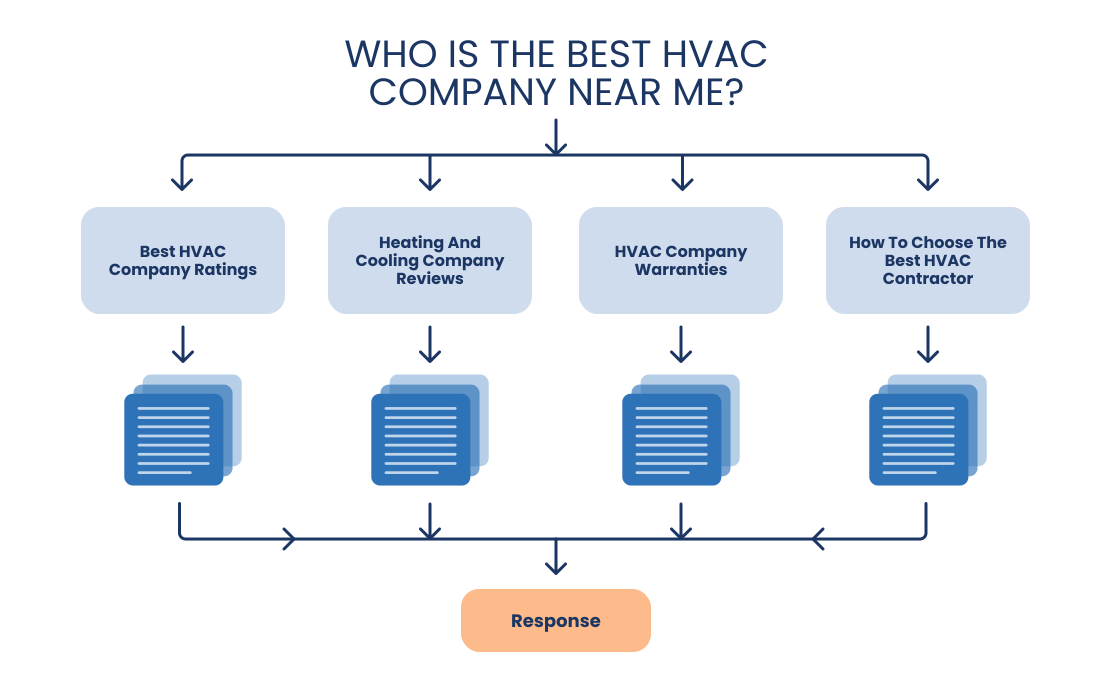
Query fan-out is a simple concept: an AI system takes a general question (i.e. “who is the best plumber in Phoenix?”) and breaks it down into multiple sub-queries. It collects the answers to the subqueries and pieces them back together into one comprehensive answer for the user.
It’s not unlike how your brain works. If someone asked you to name your favorite restaurant, you probably wouldn’t arrive at the answer based on one factor alone. You would subconsciously consider questions like, “What’s my favorite type of food?” “Where have I had the best experiences?” or “Which restaurant do I keep going back to?” Your final answer is really the result of all those smaller questions being considered together.
Why Is Query Fan-Out Used?
AI systems like ChatGPT and Gemini use query fan-out primarily to prevent hallucinations and provide a more informed response. By asking lots of subqueries and checking multiple sources, it can provide a more accurate answer and often uncover hidden search intent to ensure the user gets the answer they’re looking for.
For example, a user searching “why is my toilet leaking” often wants more than just the simple answer. They might also want to know if this problem is worth being concerned about, what steps they can take to try and fix the problem themselves, or what plumbing contractor they should call.
How Query Fan-Out Differs From Traditional Search
Traditional search relies more heavily on exact keyword and phrase matching. With traditional search results, you’ll see a list of webpages that match the keyword and assumed search intent. So one question, and you get a list of pages that Google (or your search engine of choice) feels answer it best.
With AI search, the query fan-out step means that your one question is broken down into many different subqueries, and the answer is formed by compiling the multiple answers into one comprehensive, cohesive result.
What this means for contractors is that your website is only one such source for AI search. It will look in many places to answer these subqueries including review platforms like Yelp, your Google Business Profile, Reddit, and directories. The more consistently your business appears across the sources AI trusts to investigate these subqueries, the more likely it is to be mentioned in the final result.
What Questions Are AI Engines Asking During Query Fan-Out?
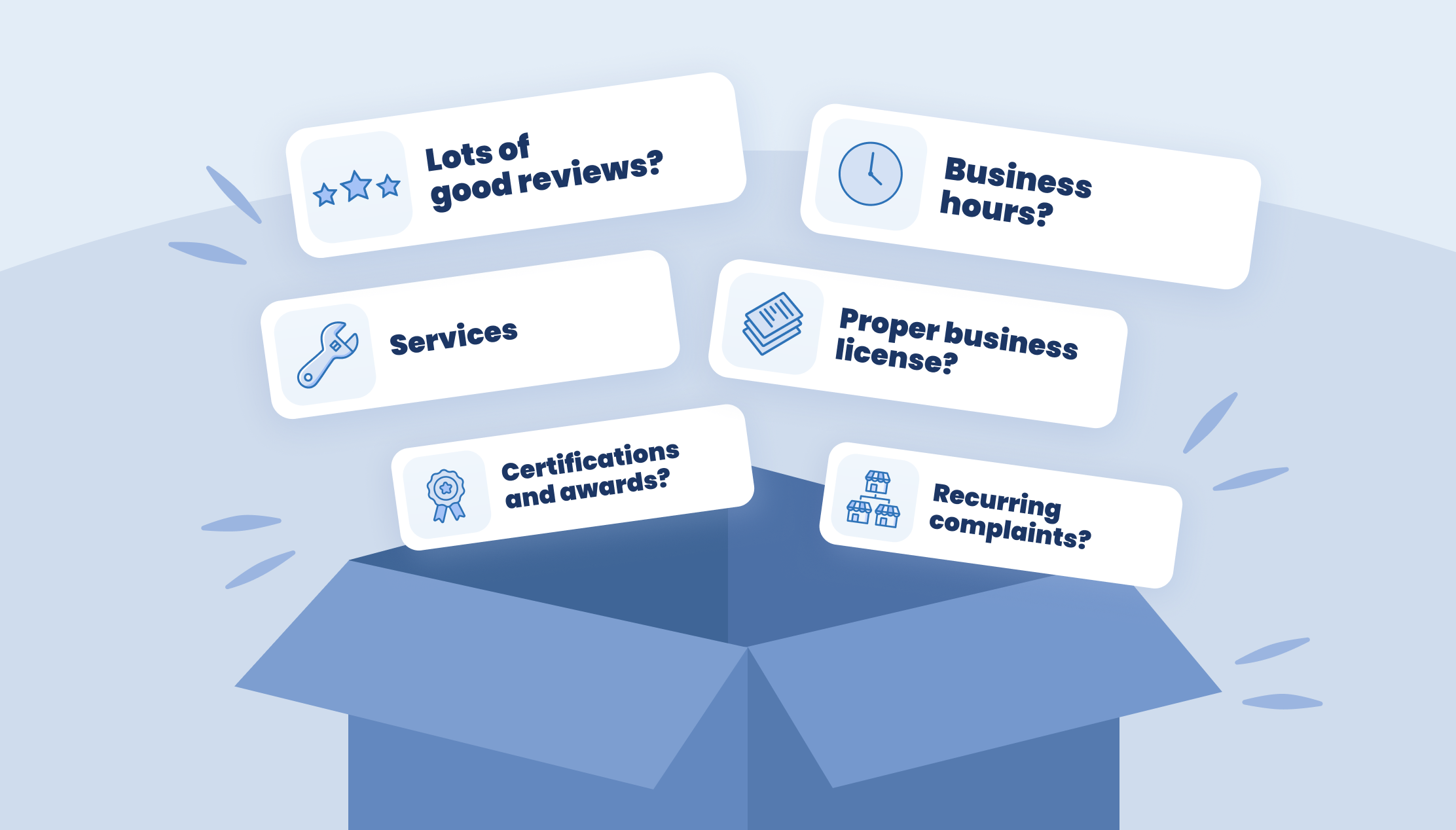
For a home services search, AI engines may fan the original query out into questions about reputation, availability, location, services, pricing, qualifications, and more. A query like “I need the best plumber in Phoenix as soon as possible” could lead to subqueries such as “top-rated plumbers in Phoenix,” “licensed plumbers in Phoenix,” “emergency plumbers open now,” or “Phoenix plumber reviews.”
Together, those subqueries help the AI system determine which businesses are the strongest match for the original question. It may be looking for evidence that a company serves the right area, offers the needed service, has a strong reputation, is available when needed, and has the experience or qualifications the user is looking for.
Pro Tip: Consistency is key.
Query fan-out is a way for AI search engines to cross-reference and validate information. If multiple sources show different answers about your business, it’s less likely to be recommended. For example, if your website shows you being located in Phoenix, AZ, but your Yelp page shows your address in Tucson, AZ, AI will detect that error and may not recommend a business it can’t confirm the location of. You have to be sure information about your business (name, location, service area, services, hours, etc) is consistent wherever you have a digital presence.
Where Are AI Systems Getting Their Query Fan-Out Answers?
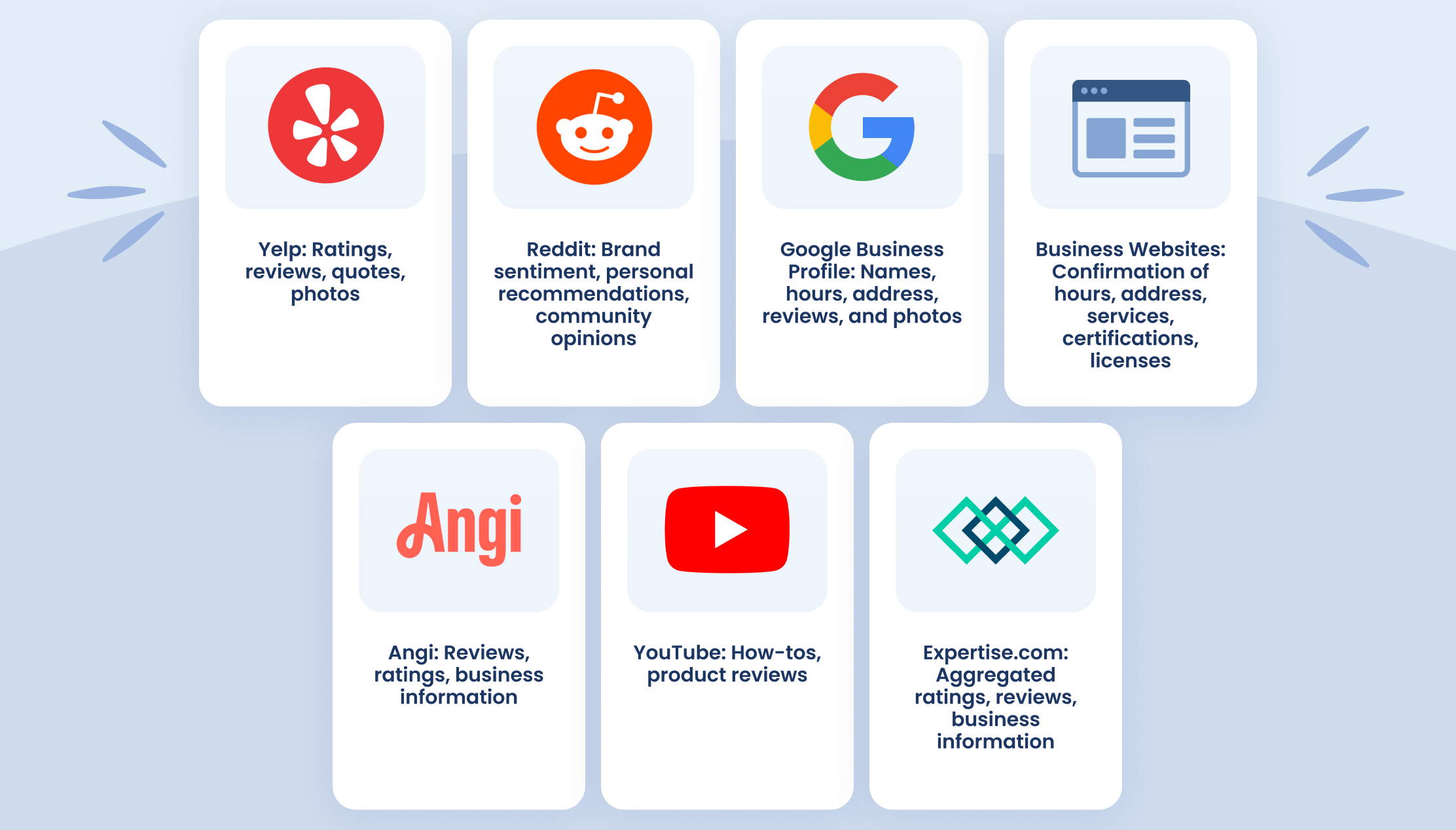
The key data sources that ChatGPT is using are mostly what you’d guess. Reddit historically leads the pack (although recently, Reddit citations in ChatGPT have dropped), with sites like YouTube, Wikipedia, Angi, and LinkedIn being heavily cited as well. Recently, ChatGPT partnered with Yelp to be able to view real-time data like reviews and photos.
While ChatGPT currently leads market share for AI search, other platforms like Claude, Gemini, and Perplexity also account for millions of searches daily. Interestingly, the source mix between different AI platforms varies widely. Regardless, there are enough commonalities between the platforms to draw conclusions around what sources are key for home service companies.
Examples of Key Data Sources for AI Search Platforms:
A Home Services Query Fan-Out Example
Let’s look at an example of how this works in practice. Imagine a homeowner in Baton Rouge, LA, has noticed shingles missing after a heavy storm. They open up ChatGPT, and type in “I need a roofing contractor near me to fix missing shingles”. ChatGPT will break that query down into multiple questions.
First, it’s going to narrow down the list of candidates by filtering for roofing contractors in Baton Rouge that offer shingle repair and/or storm damage services. Some of those questions might look like:
- Best roofing contractors Baton Rouge
- Missing shingle repair contractors Baton Rouge
- Storm damage roofing services Baton Rouge
- Average roof repair cost Baton Rouge
- Best Baton Rouge roofing companies reviews
Next, it’s going to compare different contractors that have met those criteria. Some of those fan-out queries for each candidate might look like:
- Contractor A reviews Baton Rouge
- Contractor A storm damage roofing services
- Contractor A roofing license Louisiana
- Contractor A BBB complaints
- Contractor A roof repair warranties
- Contractor B reviews Baton Rouge
- Contractor B storm damage roofing services
- And so on for other businesses the system is considering.
The exact queries will vary, but research and query fan-out tools give us a good idea of what these searches can look like in practice. This is a very simplified example of a much more complex process. AI systems may generate many related searches, revisit or refine them, compare information across multiple sources, and weigh different signals before forming a response.
That process gives AI systems many different ways to learn about your business. Information may come from company websites, Google Business Profiles, review platforms, directories, licensing sources, Reddit, and other places across the web.
The takeaway is that AI search is no longer simply matching one keyword to one webpage. Your business may need to appear as a relevant, credible option across many related searches and sources before it is surfaced in the final response.
Why Query Fan-Out Matters for Contractors
The implication for local businesses like home service contractors is that now, AI search platforms are doing the research for users. Instead of the user comparing different companies, it’s going to just give them one, or maybe a few, answers. And with agentic AI, it’s going a step further to do things like book the call. You definitely want your company to be in that final response!
Where Generative Engine Optimization Fits In
Generative Engine Optimization (GEO), sometimes referred to as “AI SEO” or “AIO”, is the effort to improve visibility in AI search platforms and increase the likelihood of showing up in search results. This is done in a number of ways.
Entity Optimization
AI-powered search uses “entities”. An entity is an established person, place, or thing. Examples of this can be people, processes, businesses, and so forth.
As part of a GEO campaign, entity optimization strengthens your business’ entity profile by ensuring your business information is consistent across the web. It also involves implementing structured data on your website to make it easier for AI to parse and understand your business. Earning brand citations and external references can also play a part in entity optimization.
Basically, this is the process of making sure AI can see your business and know exactly what you do, where you do, and why you’re a high-value choice to recommend for its users.
Technical GEO Optimization
Technical GEO optimization goes hand-in-hand with SEO. This looks like structuring your website in such a way that it’s easy for AI systems to crawl, interpret, and extract the information it wants. This can be accomplished with schema markup, internal linking structure optimization, implementing an LLMs.txt file, and other technical website optimizations and improvements.
AI Content Optimization
Words still matter! Optimizing content for AI systems to easily understand and extract answers from is key. AI content optimization looks like identifying the information that both users and AI systems are looking for, and then quickly and clearly answering them.
Local AI Search Optimization
Visibility is only part of the equation, of course. You want AI to not just see your business, but decide it’s the one to show potential customers. This means that optimizing for local AI search is key. This can involve increasing local citations, ensuring consistency across local directories, and looking at how your brand appears on platforms like Reddit, Yelp, and your GBP.
How We Help at RYNO Strategic Solutions
Relying on general marketing knowledge of old isn’t enough anymore. The constantly changing digital marketing trends and technologies demand expertise, and for most contractors, that’s where a partner comes in. At RYNO, we’ve been helping home service companies for nearly two decades with a full suite of digital marketing services.
Today, that suite includes our generative engine optimization services. We help home services companies strengthen content coverage, reinforce brand signals, build digital authority, and improve visibility as search continues to evolve. We also provide transparent AI visibility tracking and reporting, giving you a clearer view of where your brand is appearing, how it’s being represented, and how your visibility is changing beyond traditional rankings.
The bottom line: AI search is changing how homeowners discover and evaluate contractors. Are you preparing your digital presence for the future?
